Learn to Kiteboard in Cabarete: The Complete Beginner's Guide
Quick Answer: To learn kiteboarding in Cabarete, take lessons with an IKO-certified school on Kite Beach, where warm water and 300+ windy days a year create ideal conditions. Most beginners ride within about 4 lessons. At AGK Kite School, private lessons start at $76 USD/hour and a 10-hour package is $600. No experience or special fitness is required.
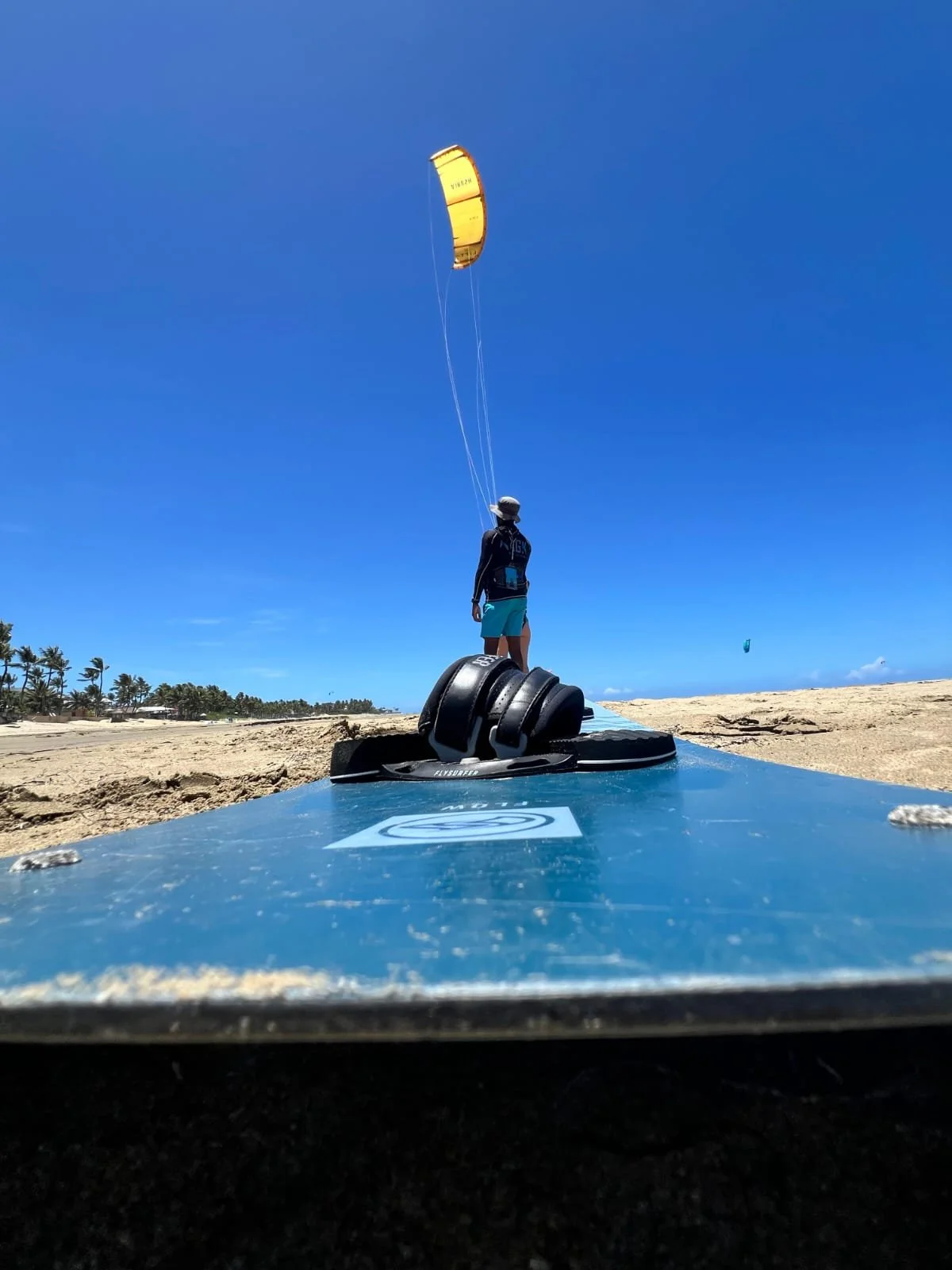
If you've watched riders skim across Cabarete Bay, leaning back against a kite and carving through turquoise water, and thought "I want to do that" — this guide is your starting point. It covers everything a complete beginner needs to learn kiteboarding in Cabarete: how the sport works, why this little Dominican town is the best classroom on Earth, what your first lessons look like, what gear and budget you'll need, and how to stay safe while progressing fast.
What is kiteboarding, exactly?
Kiteboarding (also called kitesurfing) is a wind-powered water sport in which you ride a small board across the water while harnessing the pull of a large, controllable inflatable kite. According to Wikipedia's overview of kiteboarding, it merges elements of wakeboarding, windsurfing, surfing, paragliding and gymnastics into one discipline — which is exactly why it feels so addictive once it clicks. The kite is steered with a control bar connected by lines, and its power is transferred to your body through a harness around your waist or seat. You don't hold the kite's full force with your arms; the harness does the heavy lifting, which is the single biggest reason kiteboarding is far less strenuous than it looks.
There are several riding styles — freeride (cruising and jumping), freestyle (tricks), wave riding, and racing/foiling — but every beginner starts in the same place: learning to fly and control the kite before ever standing on a board.
Why Cabarete is the world's best place to learn
Cabarete sits on the North Coast of the Dominican Republic and is recognized globally as a wind-sport mecca. The town was a sleepy fishing village until windsurfers discovered its reliable breeze in the 1980s; by the late 1990s kitesurfing had taken over, and today it hosts international competitions and a year-round community of riders. The official Go Dominican Republic tourism board calls the DR "ground zero for surfing, kitesurfing, and windsurfing" and the number-one wind-sports coast in the Caribbean. You can read more about the town itself on the Cabarete Wikipedia page.
What makes the conditions so beginner-friendly comes down to four things:
• Wind you can count on. Cabarete gets an estimated 280–350 windy days a year, thanks to a mix of summer thermal winds, winter cold fronts, and year-round trade winds.
• Warm water. The sea stays a comfortable 25–30 °C (77–86 °F) all year, so you ride in boardshorts and a rashguard rather than a thick wetsuit.
• A protected, reef-fronted bay. An offshore reef knocks down the swell, leaving a big, walkable bay that's forgiving for first-timers.
• Side-onshore wind. Crucially, Cabarete's wind blows side-onshore — it gently pushes you back toward the beach rather than out to sea. That's a major safety advantage when you're still learning to ride upwind.
Is kiteboarding hard to learn? Who can do it?
Here's the honest truth: kiteboarding has a learning curve, but it's far more accessible than most beginners fear. It is a skill sport, not a strength sport. The harness carries the kite's pull, so success comes from timing, body position and kite control — not muscle. People of a wide range of ages and fitness levels learn successfully, and AGK has even coached the same teenage rider's progress across multiple seasons.
If you've ever done a board sport — wakeboarding, snowboarding, surfing or skateboarding — you'll likely pick up the board phase faster. But plenty of riders with zero board experience get up and riding too. The biggest predictor of success isn't athleticism; it's getting proper instruction and putting in consecutive hours.
Why IKO-certified instruction matters
You can't safely teach yourself kiteboarding from YouTube. A kite is a powerful aerofoil, and the difference between a great first week and a dangerous one is almost entirely about technique and safety habits. That's why you should always learn with IKO-certified instructors.
The International Kiteboarding Organization (IKO) is the world's leading kiteboarding education body. As outlined on the IKO's about page, it was founded in 2001 and now has a community of more than 600,000 kiters, around 5,000 certified instructors, and 350+ affiliated centers across 60+ countries. An IKO certification means your instructor uses standardized, tested teaching methods and safety procedures — and that the riding level you reach is recognized internationally. Every instructor at AGK Kite School is IKO-certified, and the school is led by founder Aryen Gonzalez, a former pro-kiteboarder with over 15 years of experience.
What happens in your first lesson
This surprises most people: the majority of your first session happens on the sand, not in the water. Good instruction front-loads kite control and safety, because once you can fly the kite confidently, everything else follows. A beginner lesson at AGK covers:
• Spot assessment — reading the weather forecast, wind, tide and hazards
• Communication — the hand signals you'll use on the water
• Kite safety — the safety systems, quick release, and how to use them
• Set-up — rigging the kite, harness and equipment, plus a pre-flight check
• Kite control — launching, landing, steering, and adjusting power up and down
• Land simulation — walking with the kite and "body-dragging" through the water before adding the board
Only once you can control the kite do you progress to water starts and the board. This sand-first, water-second method is the backbone of safe, fast learning.
The full beginner progression
Learning to kiteboard happens in clear stages. Here's the realistic path:
1. Trainer kite & wind window (≈1–2 hrs): Understanding the "wind window," power zone, and how to steer a small kite.
2. Full kite control & safety (≈2–4 hrs): Flying a full-size kite, relaunching it from the water, and mastering the safety release.
3. Body-dragging (≈1–2 hrs): Using the kite's power to move through the water and recover a lost board — a vital self-rescue skill.
4. Water starts (≈2–4 hrs): Getting up onto the board and riding your first few meters.
5. Riding independently (≈8–12 hrs total): Riding upwind, turning, and staying safe without supervision.
On average, most AGK students are up and skimming across the water within about 4 lessons. From there, supervised practice helps you build hours safely before going fully solo.
Understanding the gear
You don't need to own anything to start — AGK supplies it all — but it helps to know the basics:
• The kite: A large inflatable wing, sized in square meters. Lighter wind needs a bigger kite; stronger wind needs a smaller one. In Cabarete, riders typically use 9–16 m² in the lighter winter winds and 7–11 m² in the stronger summer winds. Your school fits you with the right size for the day.
• The control bar & lines: Your steering wheel and throttle, plus the all-important safety release.
• The harness: Worn around your waist or hips; this is what transfers the kite's power to your body.
• The board: Beginners learn on a "twin-tip," a symmetrical board you can ride in either direction.
• Safety gear: A helmet and impact vest, especially while learning.
If you decide to ride on your own later, you can rent quality gear from AGK from $20/hour.
Private vs. group lessons — and why packages win
AGK offers three ways to learn:
• Private lessons ($76 USD/hour) — one-on-one coaching and the fastest progression.
• Group lessons (max 3 students, $110 USD/hour split between you) — the budget-friendly way to learn with friends.
• Packages — the best value: a 5-hour package is $330 (save $50) and a 10-hour package is $600 (save $200).
Because the fastest way to learn any skill is to immerse yourself, booking a multi-hour package usually beats paying for one-off hours — both for your wallet and your progress, since skills compound when sessions are close together.
Safety culture: respect the kite, enjoy the ride
Kiteboarding is very safe when taught properly, and the riders who progress most smoothly are the ones who take the safety stage seriously. That means always doing a pre-flight check, knowing your quick release by feel, being aware of other riders and swimmers, and never going out in conditions beyond your level. AGK's team is on hand to help you launch and land — one of the trickiest moments for beginners — and the school's facilities (air compressors, lockers, showers, shaded lounge chairs and Wi-Fi) make the whole experience comfortable.
Common beginner mistakes to avoid
• Rushing to the board. Nail kite control first; the board is the easy part once the kite is second nature.
• Looking at the board instead of the kite. Your eyes should be on the kite during water starts.
• Over-gripping the bar. A relaxed grip gives finer control.
• Choosing the wrong conditions. Too much wind overwhelms beginners; your instructor will pick the right window.
• Skipping self-rescue practice. Body-dragging back to shore is a skill you'll be grateful for one day.
What to bring (and what's provided)
AGK provides kites, boards, harnesses and impact gear, so you only need: a swimsuit, reef-safe sunscreen, a rashguard or sun shirt, sunglasses with a leash, a hat, water, and a sense of adventure. (For a full breakdown, see a dedicated Cabarete packing checklist.)
When should a beginner come?
You can learn year-round in Cabarete, but if you want the lightest, most forgiving wind, the December–April season is ideal for beginners, while June–August brings stronger, more consistent wind for those ready to progress quickly. Whatever month you choose, check live conditions on Windy.com — it's what the locals use to plan each day.
How to start
Pick your dates, book a lesson, and you could be riding by the end of the week. See lesson pricing and book online, or message AGK on WhatsApp to plan a package around your trip. The nearest airport is Puerto Plata International (POP), about a 25–35 minute drive from Kite Beach.
FAQ
Is Cabarete good for beginner kiteboarders?
Yes. Warm water, steady side-onshore trade winds, a reef-protected bay and a big walkable beach make Cabarete one of the most beginner-friendly kiteboarding spots in the Caribbean, with rideable wind on most days of the year.
How many lessons do I need to learn to kiteboard?
Most people ride independently within about 4 lessons (roughly 6–12 hours total), though everyone progresses at their own pace. A 5- or 10-hour package gives you enough continuous time to get there.
Do I need to be fit or strong to kiteboard?
No. The harness transfers the kite's power to your body, not your arms, so kiteboarding rewards technique and timing far more than raw strength. A wide range of ages and fitness levels learn successfully.
How much do beginner kiteboarding lessons cost in Cabarete?
At AGK Kite School, private lessons are $76 USD/hour, group lessons are $110/hour split among up to 3 students, and a 10-hour package is $600 (saving $200 versus hourly).
Do I need my own gear to learn?
No. Lessons include high-quality kites, boards, harnesses and safety equipment. You only need a swimsuit and sun protection. Rentals are available from $20/hour once you can ride independently.
What's the difference between kiteboarding and kitesurfing?
The terms are used interchangeably for the same sport. "Kitesurfing" is sometimes used specifically when riding waves on a surfboard-style directional board, while "kiteboarding" often refers to riding a twin-tip, but most people treat them as the same thing.